.webp) gametallyh5.com
gametallyh5.comUnraveling the Extraterrestrial Enigma: The Evolution of the Alien Conspiracy in Wobbly Life

When the indie title Wobbly Life first entered the gaming scene, developed by the small, passionate team at RubberBandGames, it was almost universally categorized as a lighthearted, physics-based sandbox designed primarily for casual and cooperative entertainment. Players were dropped into a brightly colored, low-poly island filled with mundane jobs like pizza delivery, garbage collection, and taxi driving, all made chaotic by the game’s signature floppy ragdoll mechanics. It was, for all intents and purposes, a family-friendly alternative to urban open-world games, focusing on slapstick comedy and cooperative hijinks rather than complex narratives. The aesthetic was bright, the music was cheerful, and the overarching goal seemed to be nothing more than accumulating wealth to purchase larger houses and more ridiculous outfits. There was absolutely no indication that beneath this cheerful, neon-tinted surface, a massive, map-spanning extraterrestrial conspiracy was waiting to be uncovered by the most observant players, completely shifting the game's identity over time.
The Innocent Beginnings: Discovering the First Anomalies
The initial seeds of this deep-seated mystery were not broadcasted in flashy trailers or detailed patch notes, but were instead subtly integrated into the environment, rewarding only the most perceptive explorers. In the sprawling agricultural district of the game’s primary island, players began to notice massive, intricate crop circles stamped into the golden wheat fields. These geometric patterns were starkly out of place in a world previously defined by simple roads and boxy buildings. Coupled with these visual anomalies were subtle auditory cues; wandering near the farms at night occasionally yielded strange, low-frequency hums and electronic chimes that stood in harsh contrast to the game’s usually upbeat, synthetic soundtrack. These environmental breadcrumbs were the first indication that the title possessed a narrative ambition far greater than its goofy premise suggested.
The community’s reaction to these early anomalies fundamentally altered how the game was played and discussed online. What began as a series of isolated forum posts showcasing the crop circles quickly evolved into a dedicated sub-community of amateur digital sleuths. Players abandoned their virtual day jobs, trading their delivery trucks for helicopters as they scoured the island's geometry for more clues. This grassroots investigation phase transformed the collective player experience; the sandbox was no longer just a playground for physics-based chaos, but a massive puzzle waiting to be solved. The developers, noticing this shift in player engagement, leaned heavily into the mystery, setting the stage for what would become the most intricate and long-running questline in the history of the Wobbly universe.
As theories mounted, the community began categorizing these anomalies, mapping out the precise locations of unusual light phenomena and mapping out the geometry of the crop circles. The sheer contrast between the floppy, uncoordinated nature of the playable characters and the hyper-precise, intelligent design of these extraterrestrial hints created a fascinating thematic dissonance. Players realized that while their characters struggled to walk in a straight line without tripping over a fire hydrant, a vastly superior intelligence was executing flawless, map-wide manipulations right under their noses.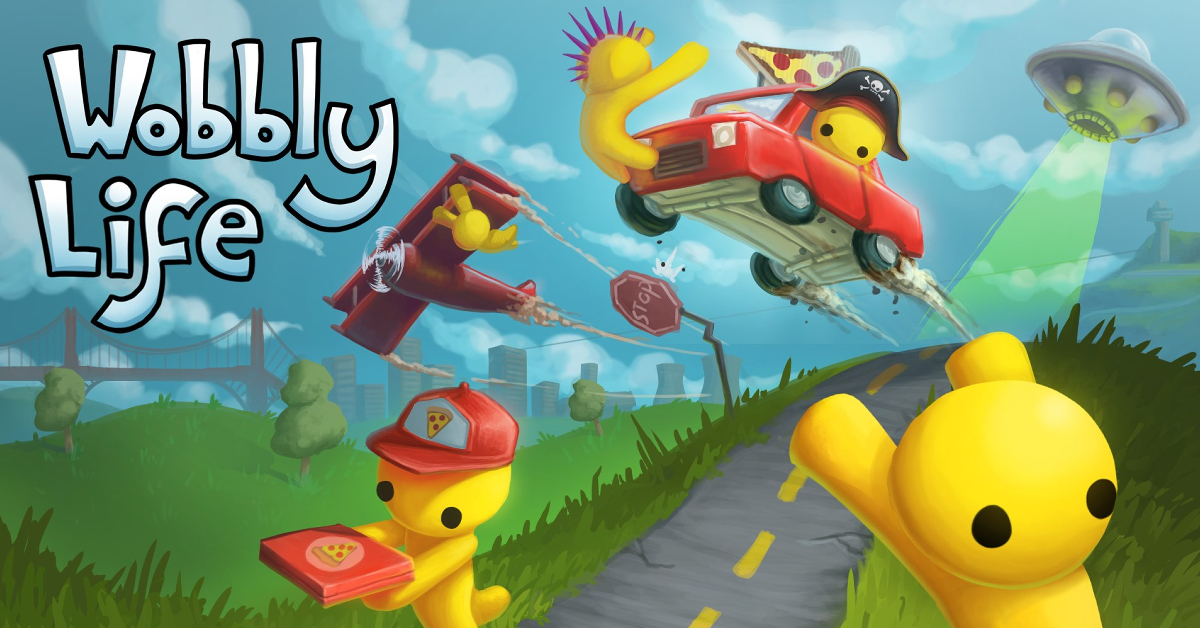
The Jungle Island Expansion: A Paradigm Shift in Environment
The release of the highly anticipated Jungle Island update marked the first time the game's extraterrestrial conspiracy evolved from subtle background lore into a tangible, physical location. This massive map expansion introduced a completely new biome that was a drastic departure from the familiar urban and suburban landscapes players were accustomed to navigating. The dense, foreboding atmosphere of the jungle, complete with towering ancient trees and treacherous, uneven terrain, actively fought against the player's clumsy locomotion mechanics. The transition in sound design was equally jarring—moving from the cheerful hubbub of the city to ambient, echoing jungle noises intermixed with unnatural, rhythmic mechanical hums that seemed to emanate from the very rock formations themselves.
Deep within this inhospitable environment, persistent explorers stumbled upon the most significant clue to date: massive, impenetrable metal vault doors built directly into the side of a sheer cliff face. This architectural anomaly was visually staggering. The cold, brutalist steel of the bunker clashed violently with the lush, organic greenery of the jungle and the ancient stone ruins scattered nearby. It was a profound piece of environmental storytelling that confirmed the community's wildest theories. This wasn't just a crashed ship or a visiting scout; there was a permanent, highly funded, and highly secretive operation taking place on the island, deliberately hidden away from the civilian population.
The discovery of the bunker doors shifted the gameplay loop from passive observation to active infiltration. Players spent countless hours ramming the doors with vehicles, dropping explosives from helicopters, and utilizing every quirk of the physics engine in desperate attempts to breach the facility. This unified the player base behind a single, tangible goal. The jungle was no longer just a new place to explore; it was the focal point of a massive cover-up, and breaking into that bunker became a badge of honor that defined the most dedicated tier of the community.
Establishing the Secret Government Presence
When players finally solved the intricate external puzzles required to force the massive jungle bunker doors open, they were met with an environment that completely subverted the game's established visual identity. Gaining entry to the facility revealed a sprawling subterranean labyrinth operated by a shadowy, Men-in-Black style government agency. The transition was visually jarring; the warm, sunlit color palette of the surface world was instantly replaced by stark, clinical white lighting, cold metallic surfaces, and heavily reinforced security checkpoints. Navigating this space felt entirely alien to a game normally focused on vibrant playgrounds and colorful suburban homes.
Exploring the subterranean facility unveiled a chilling narrative through pristine environmental storytelling. Players discovered containment units built for beings far larger than standard characters, sterile research laboratories filled with advanced scanning equipment, and a network of interconnected observation decks. The walls were lined with whiteboards displaying frantic, cryptic diagrams of flying saucers, extraterrestrial biological profiles, and complex mathematical formulas. The most unsettling aspect of the facility, however, was its complete abandonment. The sheer scale of the equipment indicated a massive workforce, yet the halls were eerily empty, painting a sinister picture of a sudden, panicked evacuation or a deeply enforced cover-up.
This government presence transformed the lore from a simple "aliens exist" narrative into a complex tale of espionage and reverse-engineering. The presence of human-built technology attempting to interface with alien hardware suggested that the island's authorities had known about the extraterrestrial presence for a long time. It added a layer of systemic paranoia to the game; players began to view the police officers and mundane city officials differently, wondering just how high up the chain of command this conspiracy went and what other secrets the island’s government was hiding from the floppy, oblivious citizens.
The Global Artifact Scavenger Hunt: Piecing Together the Puzzle
Activating the dormant central console within the government base initiated what is widely considered the most complex and demanding questline in the game's history: the global artifact scavenger hunt. Players discovered that the government's attempts to interface with the alien technology had stalled due to missing power sources—glowing, spherical extraterrestrial artifacts that had been scattered across the entire map. This mechanic forced players to leave the confines of the bunker and revisit familiar locations with a completely new perspective, transforming the entire open world into a massive, interconnected puzzle box that required intimate knowledge of the map's geography.
The sheer scale and difficulty of retrieving these artifacts cannot be overstated, primarily due to the game's intentionally uncooperative physics engine. Because the game relies heavily on momentum, weight distribution, and a manual grab mechanic, transporting these heavy, unwieldy orbs across vast distances became a monumental task. A player couldn't simply place the artifact in an inventory screen; they had to physically carry it, load it into a vehicle, and carefully drive or fly it back to the jungle bunker without dropping it into the ocean or accidentally launching it off a cliff due to a physics glitch.
The Distribution of Extraterrestrial Relics
Identifying Key Locations and Physics Puzzles
- The Subterranean Mine Shaft: Buried deep beneath the surface, this artifact demands that players navigate hazardous rail systems, dodge explosive barrels, and master the climbing mechanics in an environment completely devoid of natural light.
- The Abyssal Shipwreck: Submerged off the coast of the main island, retrieving this relic forces players to battle against tricky buoyancy physics while maintaining their limited oxygen supply within the haunting wreckage of a sunken galleon.
- The Frozen Mountain Peak: Located at the absolute highest playable elevation on the map, this glowing sphere is encased in ice, requiring either masterful piloting of aerial vehicles or an agonizingly slow, perilous climb up sheer cliff faces buffeted by digital blizzards.
- The Ancient Jungle Temple: Deep within the newly added tropical biome, this final piece is heavily guarded by Indiana Jones-style traps, rolling boulders, and floor puzzles, drawing a direct narrative line between ancient civilizations and alien visitations.
Navigating the Hidden Labyrinth: Inside the Extraterrestrial Facility
The triumphant return of the scattered artifacts to the government bunker triggers one of the most visually spectacular sequences in the game. Placing each glowing orb into the central receptacle powers up a massive, previously dormant energy gate, opening the way to the true inner sanctum of the facility. This is the moment the game completely abandons its human, suburban aesthetic. Moving through the energy gate transports players out of the human-made clinical labs and directly into the heart of a crashed, colossal extraterrestrial spacecraft that the government had simply built their facility around.
The architecture of the alien ship is a masterpiece of environmental design, utilizing shapes and colors completely foreign to the rest of the game world. Cavernous spaces are illuminated by pulsing, bioluminescent purple lighting. The structural geometry abandons the rigid right angles of human buildings in favor of sweeping, biomechanical curves and floating platforms that defy gravity. The sound design shifts from the harsh hum of human generators to a deep, organic thrumming, making the ship feel less like a vehicle and more like a massive, slumbering entity that the players are slowly waking up.
The final puzzle sequences within this alien labyrinth represent a significant spike in gameplay complexity. Players must route power through a series of extraterrestrial nodes utilizing the game's physics-based grab-and-pull mechanics to align laser grids and manipulate massive, floating power cores. These puzzles require a level of precision and cooperative teamwork rarely demanded by the game's standard jobs, serving as a final, rigorous exam testing the players' mastery over the floppy physics engine before rewarding them with the game's ultimate prize.
The UFO Vehicle: Revolutionizing Wobbly Traversal Mechanics
Completing the grueling artifact hunt and powering up the alien mothership grants players access to the ultimate in-game reward: the fully functional UFO vehicle. This unlock is a watershed moment for any player, as it is not merely a cosmetic trophy, but a tool that fundamentally revolutionizes how the entire game is played. Prior to unlocking the UFO, traversal was dictated by the strict physical limitations of the world—cars required roads and struggled with terrain, while helicopters were fragile and difficult to control. The UFO shatters these limitations entirely, instantly making all previous modes of transportation obsolete.
The physics engine interactions of the UFO are completely unique within the game's vehicle roster. It features true omnidirectional hovering, allowing players to instantly stop in mid-air, strafe sideways at high speeds, and ascend vertically without the momentum buildup required by traditional aircraft. The vehicle operates with zero friction against the terrain, gliding effortlessly over mountains, oceans, and skyscrapers alike. This level of precise control feels entirely alien in a game built around clumsy, unpredictable movement, turning the player from a bumbling civilian into an apex master of their environment.
However, the most game-changing mechanic of the UFO is its integrated tractor beam. By activating this feature, players can pick up massive, heavy objects, other vehicles, and even cooperative partners directly from the sky. This mechanic effectively breaks the game's economy and job systems in the most entertaining way possible. Mundane tasks like delivering hazardous waste or transporting fragile goods become trivial physics experiments, as players simply abduct their cargo from the sky and drop it precisely at the destination, redefining the cooperative chaos that makes the game so beloved.
The Alien Wardrobe: Identity and Community Status
Alongside the revolutionary vehicle, successfully completing the extraterrestrial conspiracy questline rewards players with the exclusive alien costume. In a game heavily driven by cosmetic customization, where player expression is entirely dictated by the absurd outfits they can purchase or unlock, this specific wardrobe piece quickly became the ultimate symbol of veteran status. Equipping the alien costume is an immediate visual broadcast to any server that the player possesses the dedication, puzzle-solving skills, and physics mastery required to navigate the game's most difficult content.
The visual design of the alien suit deliberately alienates the player character from the rest of the civilian populace. Replacing the standard, smiling jelly-bean head is an oversized, glowing, biomechanical helmet lacking any traditional facial features. The body suit pulses with the same deep purple energy found within the crashed spacecraft, creating a stark visual contrast when walking through the brightly lit, mundane aisles of the city supermarket. It turns the player character into a walking anomaly, an entity that clearly does not belong in the cheerfully suburban environment they inhabit.
Beyond pure cosmetic prestige, the alien wardrobe integrates hidden mechanical advantages that blend fashion directly with gameplay functionality. Wearing specific components of the extraterrestrial suit grants the player access to an integrated hover-pack, enhancing jump height and allowing for brief periods of levitation. This subtle mechanical buff alters standard platforming and on-foot traversal, ensuring that the reward for completing the game's deepest mystery permanently enhances the player's physical capabilities within the sandbox, blurring the line between cosmetic achievement and literal character evolution.
The Space Program Update: Taking the Sandbox Beyond the Stratosphere
Chronologically following the widespread discovery of the UFO and the crashed mothership, the developers released the massive Space Update, heavily leaning into the extraterrestrial narrative they had meticulously established. The conspiracy was no longer a secret confined to the jungle island; it became a global initiative. The map was expanded to include a massive, highly funded aerospace facility, transitioning the narrative from a covert government cover-up to a public, highly publicized expedition into the unknown. This marked a shift in the lore, suggesting that the government had finally reverse-engineered enough technology to reach out to the stars themselves.
The construction and execution of the Wobbly Space Program required massive collaborative effort. Players had to engage in a series of complex logistical jobs, transporting highly volatile rocket fuel and delicate aerospace components across the map to assemble the towering launch vehicle. The sequence of preparing for liftoff, strapping into the command module, and experiencing the violently shaky, physics-heavy launch sequence is one of the most cinematic and thrilling moments in the game, acting as a direct continuation of the narrative thread started by the crop circles so many updates prior.
Arriving at the Moon Base introduced an environment that completely upended the core sandbox experience. The lunar surface features a highly accurate simulation of low gravity, changing every fundamental rule of movement, jumping, and vehicle handling that players had spent hundreds of hours mastering. The floaty, frictionless environment turns simple tasks like walking or driving a rover into hilarious, bounding chaos. The alien narrative thus served as the direct narrative catalyst for the game's most ambitious mechanical shift, proving that the mystery was intricately tied to the game's technical evolution.
Lore Implications: Are the Wobblies an Engineered Species?
The introduction of the UFO, the space station, and the alien costumes forced the deeply invested community to drastically re-evaluate the foundational lore of the entire universe. If extraterrestrials with highly advanced technology have been monitoring the island from secret underground bunkers and orbital stations, what does that mean for the brightly colored, gelatinous citizens below? The physical similarities between the playable characters and the hidden alien entities are too glaring to ignore; both share the same lacking facial features, the same floppy, boneless appendages, and the same chaotic movement patterns. This has led to the prominent community theory that the island is not a naturally occurring society at all.
The widely discussed "Engineered Species" hypothesis posits that the seemingly indestructible nature of the citizens—who can easily survive terminal velocity falls, massive explosions, and deep-sea pressure without a single scratch—is the result of ancient genetic manipulation by these alien overlords. Under this analytical lens, the mundane jobs the players perform are not just economic activities, but complex behavioral tests monitored by unseen researchers. The secret government base, initially thought to be a human operation investigating the aliens, is theorized by many to actually be staffed by the aliens, operating a grand, map-wide terrarium on the oblivious populace.
This darker, almost dystopian undertone creates a fascinating narrative dissonance with the game’s overwhelmingly child-friendly aesthetic. The idea that a cheerful society of jelly-people delivering hamburgers and racing bouncy castles is actually the subject of an elaborate, generations-long extraterrestrial psychological experiment completely subverts the sandbox genre's typical lack of narrative depth. It actively rewards older, more analytical players who look beyond the slapstick comedy, proving that meticulous environmental storytelling can inject profound existential mystery into even the most fundamentally silly video games.
The Future of the Conspiracy: What Lies Beyond the Stars
As the game continues to receive robust developmental support, the alien storyline remains an open-ended, tantalizing narrative thread rather than a closed book. Even after unlocking the UFO and reaching the lunar surface, players continue to find unresolved mysteries scattered throughout the game world. The moon base itself contains heavily locked blast doors requiring keycards that do not yet exist in the game, and scanning the deep space frequencies using the observatory telescopes occasionally yields encrypted audio signals that the community is still actively trying to decipher.
The ongoing engagement of the community is a testament to the developers' masterful pacing of this specific issue. The creators have successfully trained their player base to approach every minor update, holiday patch, and map tweak with intense scrutiny, looking for hidden codes or new anomalous artifacts. This dynamic ensures that the extraterrestrial mystery remains a central, animating pillar of the game's culture, driving continuous YouTube coverage, forum discussions, and cooperative exploration sessions long after the initial novelty of the physics sandbox has worn off.
Ultimately, the legacy of the alien conspiracy is its transformative power over the game's identity. By introducing a complex, time-released mystery into a simple, floppy playground, the creators demonstrated that even slapstick comedy titles can support rich, deeply engaging, and long-lasting narrative arcs. The quest for the UFO didn't just give players a fun new toy; it gave the community a shared history, a profound sense of discovery, and a reason to keep looking up at the digital sky, wondering what the developers will hide there next.