






Introduction
Since its release, Green Hell has built a reputation as one of the most realistic survival games on the market. Players have always been forced to rely on hunting, gathering, fishing, and careful resource management to survive in the unforgiving Amazon rainforest. However, one major update dramatically changed how long-term survival works: the Animal Husbandry Update.
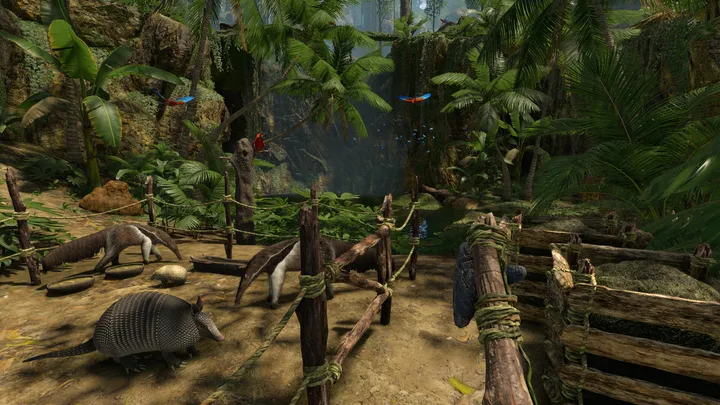
Before this expansion, food acquisition in Green Hell depended heavily on hunting wild animals and maintaining a constant supply of fresh meat. While effective, this system required frequent expeditions into dangerous areas filled with predators, venomous creatures, and environmental hazards. The introduction of animal husbandry fundamentally changed this gameplay loop by allowing players to capture, tame, breed, and manage livestock directly inside their camps.
The update introduced a completely new layer of resource management. Players now needed to consider animal feeding, enclosure construction, breeding cycles, offspring management, and long-term sustainability. While many survival games feature farming systems, Green Hell's implementation remains uniquely challenging because it must fit within the game's realistic survival framework.
This article examines how the Animal Husbandry Update works, how players can maximize its benefits, and why it represents one of the most important gameplay changes in Green Hell's history.
1. Why Animal Husbandry Changed the Survival Meta
Before the update, protein sources came primarily from hunting and fishing. While these methods were reliable, they required constant movement throughout the jungle. Every hunting trip exposed players to injuries, infections, snakes, jaguars, and other threats.
The Animal Husbandry Update introduced a safer alternative. Instead of repeatedly hunting wildlife, players could create renewable food sources near their base. This dramatically reduced the risks associated with daily survival.
Key Benefits Introduced
- Renewable meat production
- Sustainable nutrient management
- Reduced hunting requirements
- Better long-term food security
- Increased camp self-sufficiency
Impact on Long-Term Survival
Players attempting survival runs lasting hundreds of in-game days quickly discovered that animal farming reduced resource pressure significantly. The update shifted the focus from constant food gathering to resource optimization.
Strategic Importance
Animal husbandry became particularly valuable in higher difficulty settings where resource management plays a larger role in survival.
2. Understanding the New Animal Species
The update introduced several animals that could be captured and raised.
Each species behaves differently and provides unique benefits.
Available Livestock
Players can domesticate:
- Capybaras
- Peccaries
- Tapirs
These animals vary in size, feeding requirements, and reproduction speed.
Species Selection Considerations
Smaller animals typically require fewer resources, while larger animals provide greater returns when harvested.
Players often choose species based on available camp space and food production goals.
Early-Game Recommendation
Capybaras are generally considered the easiest livestock for beginners due to their manageable requirements.
3. Capturing Your First Animal
Capturing animals is the first challenge introduced by the update.
Unlike traditional hunting, successful capture requires preparation and patience.
Required Equipment
Players typically need:
- Rope
- Traps
- Safe enclosures
- Food reserves
Without proper preparation, captured animals may escape or die shortly after arrival.
Tracking Potential Livestock
Wild animals must first be located and approached carefully.
Observation becomes important because frightened animals can flee significant distances before capture becomes possible.
Common Beginner Mistake
Many players attempt captures before completing their enclosure systems, creating unnecessary complications.
4. Building Effective Animal Pens
Housing plays a critical role in successful animal management.
Poor enclosure design can lead to escaped animals and wasted resources.
Core Construction Requirements
Effective pens require:
- Durable walls
- Gates
- Feeding areas
- Adequate space
Each species requires enough room to move naturally.
Placement Strategy
Pens should be located near:
- Water sources
- Food storage
- Main shelter areas
This minimizes daily maintenance requirements.
Expansion Planning
Many experienced players build larger pens from the beginning to accommodate future breeding programs.

5. Managing Animal Nutrition
Feeding animals introduces an entirely new resource management system.
Players must balance their own survival needs with livestock requirements.
Common Food Sources
Animals consume:
- Fruits
- Vegetables
- Native plants
Different species may favor certain food types.
Resource Consumption Challenges
Large livestock populations can consume significant quantities of food.
Without planning, animal farms may become unsustainable.
Food Production Strategy
Experienced players establish dedicated harvesting routes specifically for livestock maintenance.
6. Understanding the Breeding System
Breeding represents the heart of the Animal Husbandry Update.
Rather than repeatedly capturing wild animals, players can establish self-sustaining populations.
Breeding Requirements
Successful reproduction generally requires:
- Healthy animals
- Proper nutrition
- Suitable housing
- Adequate population balance
Neglecting any factor reduces breeding efficiency.
Population Growth
Once established, breeding programs can dramatically increase food availability.
Many players transition from hunting-based survival to livestock-based survival entirely.
Long-Term Benefits
Breeding reduces dependence on wild animal populations and creates predictable resource generation.
7. Balancing Farming and Hunting
The update did not completely eliminate the need for hunting.
Instead, it created a more balanced survival economy.
Why Hunting Remains Relevant
Hunting still provides:
- Immediate food
- Animal skins
- Bones
- Emergency resources
Animal husbandry functions best when combined with traditional survival methods.
Resource Diversity
Players relying exclusively on livestock may encounter shortages during breeding disruptions or resource shortages.
Hybrid Strategy
The most successful survivors combine farming, hunting, fishing, and gathering into a diversified survival network.
8. Economic Value of Animal Products
Animal husbandry affects more than food production.
Livestock provide multiple resources that support broader survival goals.
Valuable Outputs
Animals can provide:
- Meat
- Bones
- Hides
- Organic materials
These resources support crafting and medical systems.
Resource Efficiency
Compared to repeated hunting trips, livestock often provide more predictable returns over time.
Camp Sustainability
Self-sufficient camps become significantly easier to maintain after establishing reliable animal production systems.

9. Challenges Introduced by the Update
Although powerful, animal husbandry is not without drawbacks.
Many players underestimated the workload involved.
Common Management Problems
Players frequently encounter:
- Food shortages
- Escaped animals
- Overcrowding
- Resource drain
Each issue requires active management.
Increased Responsibility
The update effectively adds another survival layer to monitor alongside:
- Hydration
- Nutrition
- Sanity
- Injuries
Animal welfare becomes an additional daily concern.
Difficulty Balance
The system remains challenging enough to fit Green Hell's realistic survival philosophy.
10. The Future Impact of Animal Husbandry
The Animal Husbandry Update represents more than a simple content addition.
It fundamentally changed how players approach long-term survival.
New Survival Strategies
Players now design camps around:
- Food production
- Breeding efficiency
- Resource sustainability
- Livestock management
This creates deeper progression paths than previously available.
Community Reception
The update received widespread attention because it addressed one of the game's biggest late-game limitations: sustainable food generation.
Many veteran players consider it among the most important updates ever released for Green Hell.
Legacy of the Update
Animal husbandry transformed Green Hell from a pure hunter-gatherer survival experience into a broader ecosystem management simulator.
Conclusion
The Animal Husbandry Update significantly expanded Green Hell's survival systems by introducing livestock management, breeding mechanics, and renewable food production. What initially appeared to be a simple farming feature quickly evolved into one of the deepest resource-management systems in the game.
Players now face new strategic decisions regarding enclosure construction, breeding optimization, food allocation, and long-term sustainability. The update rewards careful planning and creates additional progression opportunities for those seeking extended survival challenges.
More importantly, animal husbandry changes the entire rhythm of gameplay. Instead of constantly hunting across the rainforest, survivors can gradually transform their camps into self-sustaining ecosystems. This shift not only improves efficiency but also reinforces Green Hell's core philosophy: survival is about preparation, adaptation, and mastering the environment rather than simply reacting to it.